
Strategy

Choose where to invest, with the probability of return of every alternative.

Every business case comes with a point estimate and implicit assumptions. WhAI puts the options on the same model, with risk, cash and covenants, and brings the best decision, in euros.

Capital on the options with most expected value

The risk of every choice, in euros and probability

Every scenario recalculated in hours, not in weeks

WhAI comparing five investment alternatives on the same model
THE PROBLEM

Millions are invested on static scenarios and point estimates: the risk stays out of the math.

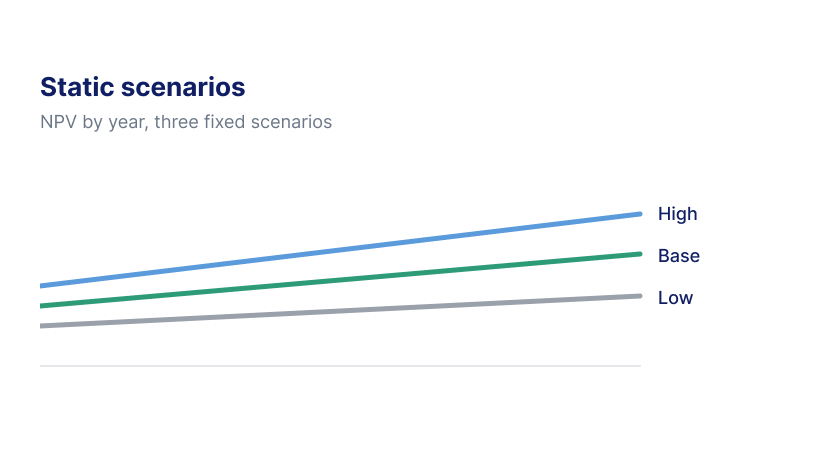
NPV by year with three fixed scenarios

Static scenarios

Scenarios set once, on hidden assumptions, that do not follow prices, rates and demand.
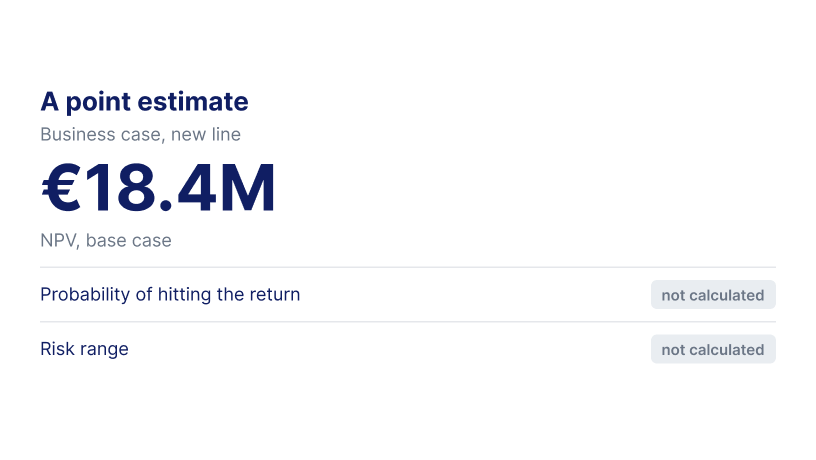
Business case with a single NPV and no probability of return

A point estimate

An expected value does not show the odds of hitting the return, or how much is at risk.
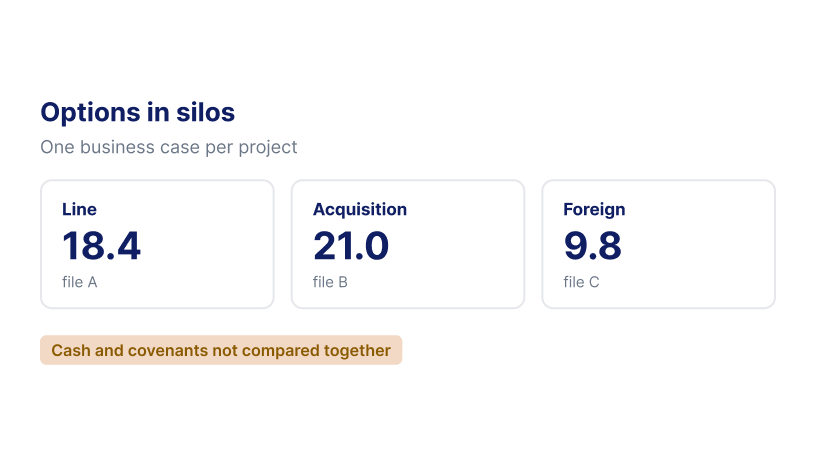
Separate business cases per project, cash and covenants never compared

Options in silos

Each project has its own case, and nobody compares them on cash and covenants together.

SOLUTIONS FOR 
Strategy

Options, risk and capital on one model.

The function's recurring decisions, each with its own data and constraints.

STRATEGY

Strategic alternatives

Which project to fund, by comparing all the options with the same method.
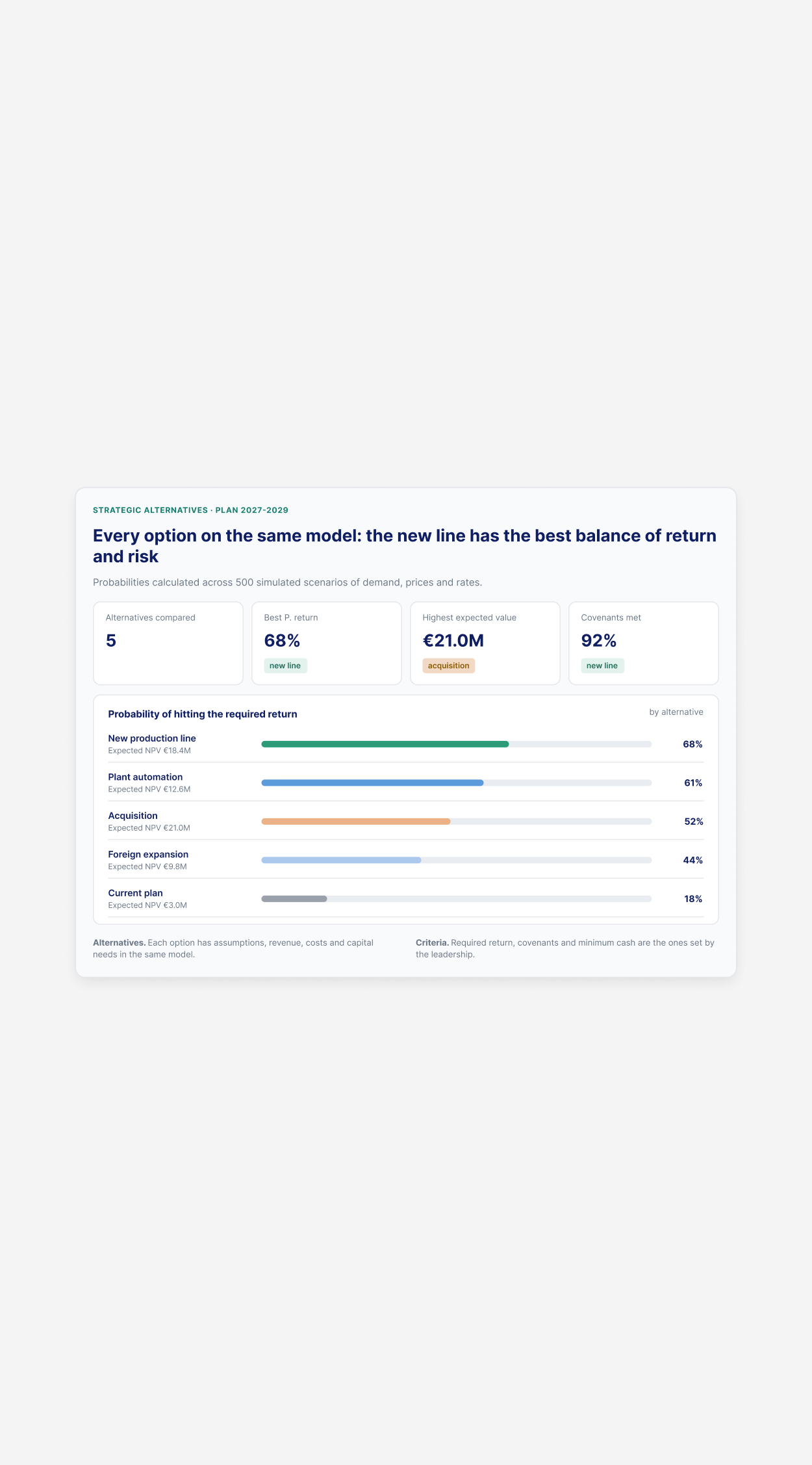
  • Capital on the best projects: NPV, ROI and IRR compared
  • Fewer wrong calls: probability of hitting the return
  • Weighted score on leadership's criteria, in less time
WhAI comparing five investment alternatives by probability of return
STRATEGY

Strategic alternatives

Which project to fund, by comparing all the options with the same method.

  • Capital on the best projects: NPV, ROI and IRR compared
  • Fewer wrong calls: probability of hitting the return
  • Weighted score on leadership's criteria, in less time
WhAI comparing five investment alternatives by probability of return
STRATEGY

Risk and sensitivity

How each choice holds up if demand, prices and FX move, with probabilities.
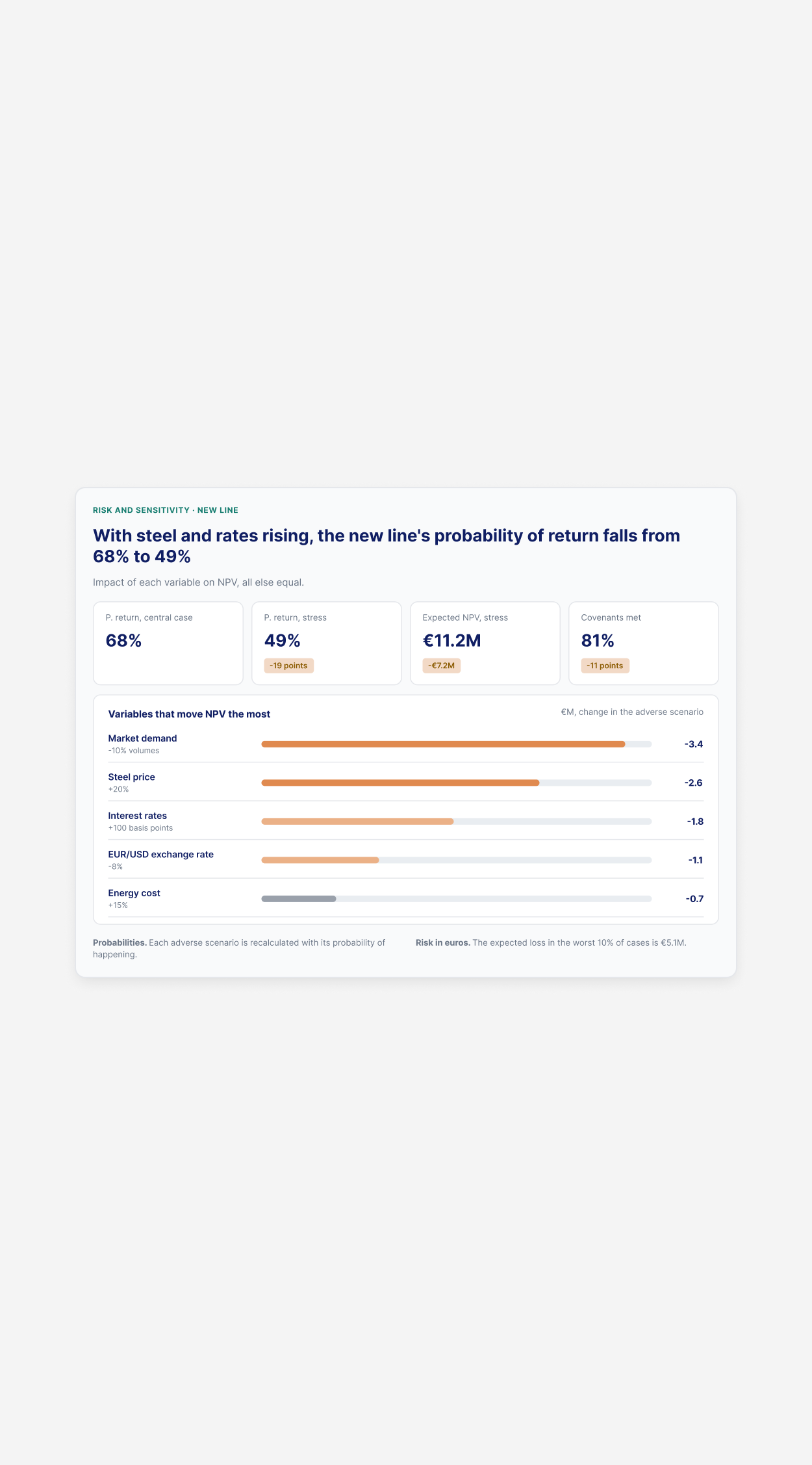
  • Downside made clear: probability of negative NPV
  • Focus on the right levers: each driver's impact on EBITDA
  • Choices that hold up: NPV and covenants under stress
WhAI stress test of an investment on demand, prices and FX
STRATEGY

Strategic alternatives

Which project to fund, by comparing all the options with the same method.

  • Capital on the best projects: NPV, ROI and IRR compared
  • Fewer wrong calls: probability of hitting the return
  • Weighted score on leadership's criteria, in less time
WhAI comparing five investment alternatives by probability of return
STRATEGY

Risk and sensitivity

How each choice holds up if demand, prices and FX move, with probabilities.

  • Downside made clear: probability of negative NPV
  • Focus on the right levers: each driver's impact on EBITDA
  • Choices that hold up: NPV and covenants under stress
WhAI stress test of an investment on demand, prices and FX
STRATEGY

Scenarios and capital

How to split capital across options, even combined, within cash and covenants.
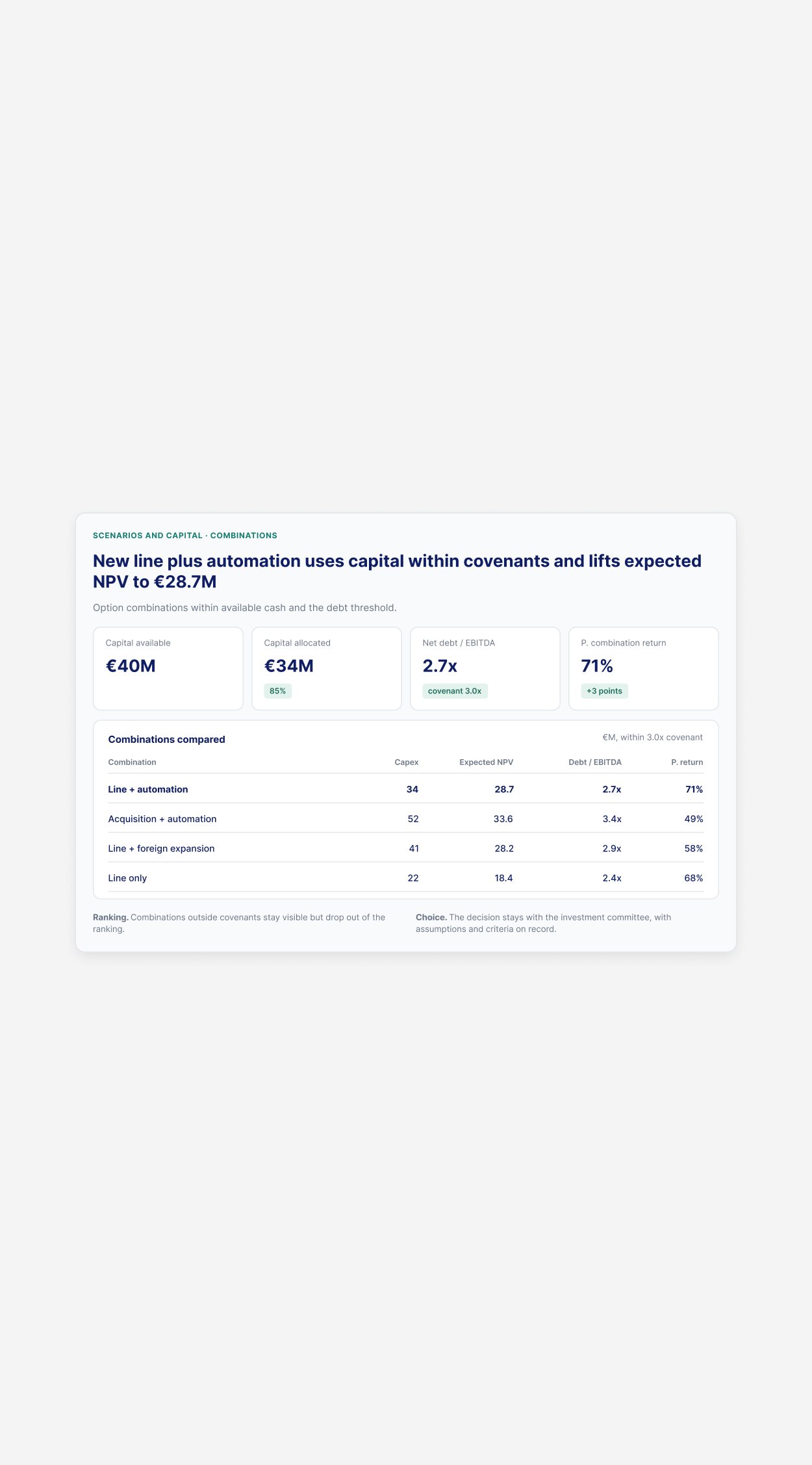
  • More value from combinations: portfolio NPV and cash
  • Sustainable plans: cash and net debt/EBITDA within covenants
  • Cost of not deciding: euros lost per month of delay
WhAI allocating capital across combined options within cash and covenants
STRATEGY

Strategic alternatives

Which project to fund, by comparing all the options with the same method.

  • Capital on the best projects: NPV, ROI and IRR compared
  • Fewer wrong calls: probability of hitting the return
  • Weighted score on leadership's criteria, in less time
WhAI comparing five investment alternatives by probability of return
STRATEGY

Risk and sensitivity

How each choice holds up if demand, prices and FX move, with probabilities.

  • Downside made clear: probability of negative NPV
  • Focus on the right levers: each driver's impact on EBITDA
  • Choices that hold up: NPV and covenants under stress
WhAI stress test of an investment on demand, prices and FX
STRATEGY

Scenarios and capital

How to split capital across options, even combined, within cash and covenants.

  • More value from combinations: portfolio NPV and cash
  • Sustainable plans: cash and net debt/EBITDA within covenants
  • Cost of not deciding: euros lost per month of delay
WhAI allocating capital across combined options within cash and covenants
A USE CASE

Investment analysis: decide before committing capital.

The decision
Which option to fund, at what risk, within financial constraints.
What WhAI does
01
Models each option on revenue, costs, cash and debt
02
Stress tests demand, prices and FX, with probabilities
03
Compares options, including combinations, within covenants
04
Ranks the alternatives with the leadership's criteria
What the annual return depends on
Capital on the highest expected-value options
Risk of picking the wrong investment option
Analysis time for the Investment Committee
Starting data
Business cases of the options, business plan, balance sheet
Who it is for

CEO, CFO, Investment Committee

DECISION INTELLIGENCE

Decisions calculated on your numbers

WhAI: the missing layer for your decisions

WhAI turns the way your company decides into a calculation model. It simulates every choice before you act, estimates the probability of hitting the goal and tracks the outcome.

DISCOVER WHAI
Open investment decision in WhAI, with constraints checked and options ranked
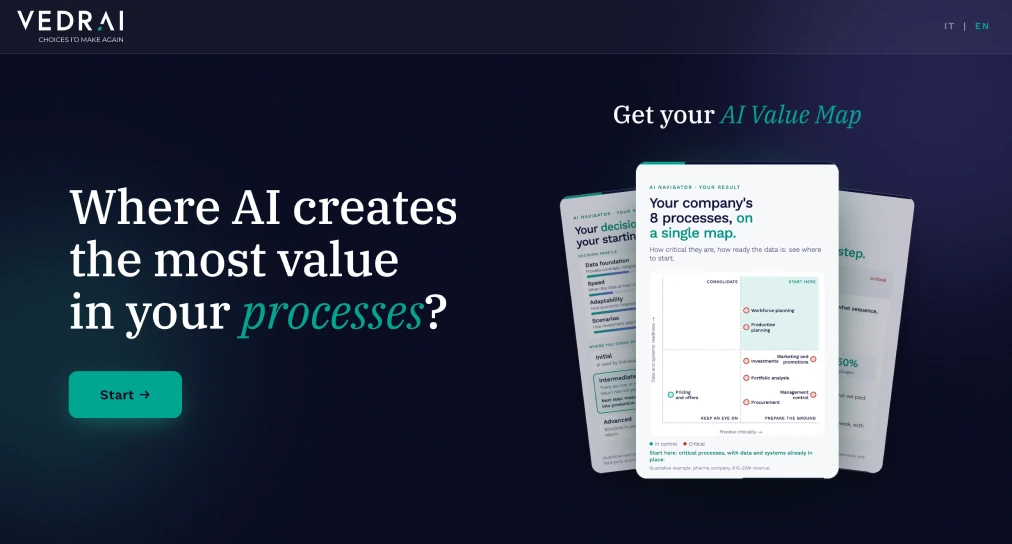
AI Navigator start page: where AI creates the most value in your processes, with a preview of the AI Value MapAI Navigator start page: where AI creates the most value in your processes, with a preview of the AI Value Map
AI NAVIGATOR

Which processes should you bring AI into?

AI Navigator is the assessment that identifies where AI creates the most value and which use case to start with: it cross-references data, process maturity, impact on margins and people, and returns your AI Value Map.

The highest-value use case
The KPIs to track
The estimated annual return

Request a demo

We’ll show you WhAI in action on a real process within your company