
HR

Decide headcount and shifts on tomorrow's demand, by store, department and time slot.

Headcount and shifts planned on the historical average can't absorb demand peaks: excess in some slots, gaps in others. WhAI brings the best decision, in euros, to people and shifts.

Fewer excess hours during periods of declining demand

Fewer sales or output lost during demand peaks

Less time spent planning shifts and headcount

WhAI calculating staffing needs for a store against forecast demand and budget
THE PROBLEM

Headcount and shifts are set once a year, while demand swings with every season.

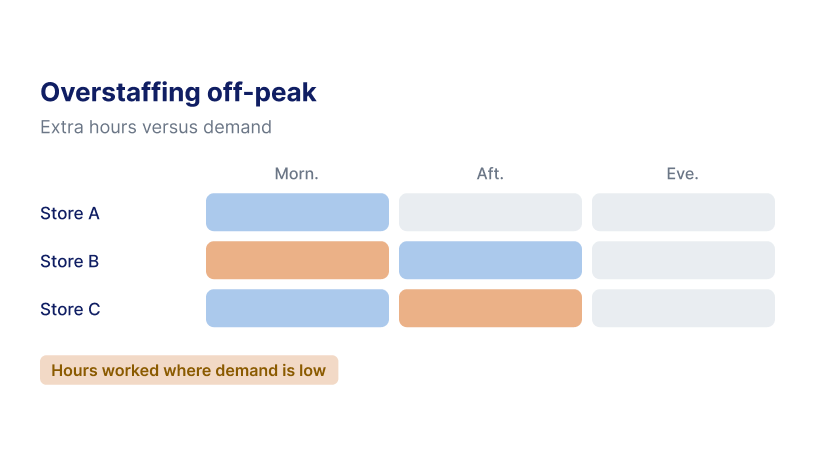
Hours worked by store and time slot compared with demand

Overstaffing off-peak

More hours worked where demand is low, across stores, departments and off-peak time slots.
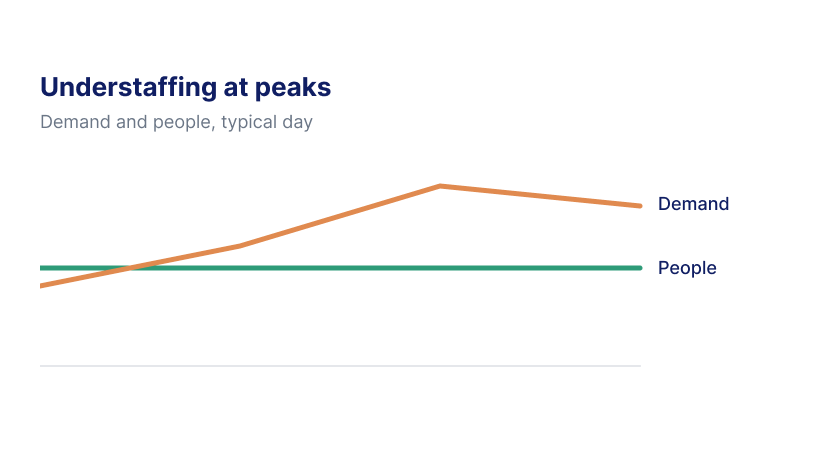
Demand rising above available people during a typical day

Understaffing at peaks

Too few people when demand rises, or when a critical role leaves: sales and output lost.
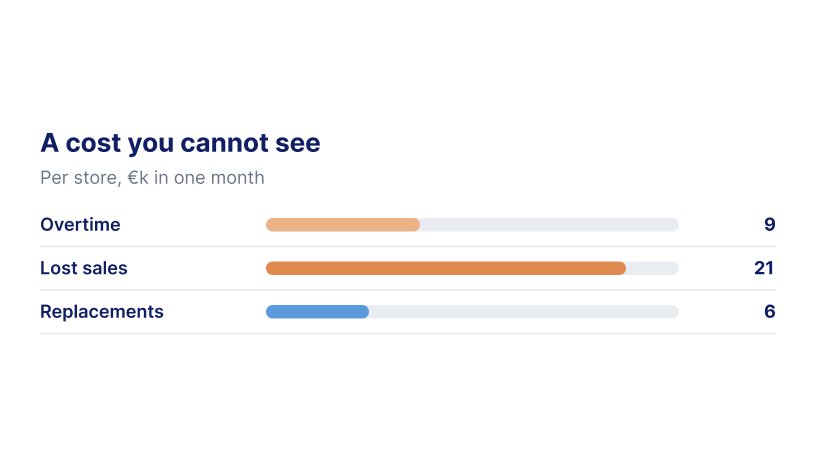
Monthly cost per store of overtime, lost sales and replacements

A cost you cannot see

The mismatch is spread across several P&L lines and never shows up as a single line item.

SOLUTIONS FOR 
HR

From demand to people.

The function's recurring decisions, each with its own data and constraints.

HR

Workforce planning

Staffing needs by store, department and time slot, calculated on the demand you forecast.

  • Staffing needs that follow forecast demand
  • Less output and sales lost in peak periods
  • Less time to plan shifts
WhAI calculating staffing needs by store and time slot against forecast demand
HR

Productivity

Where hours worked do not follow demand, and how to rebalance people across sites and departments.

  • Cost of excess hours made visible
  • Fixable cost separated from structural cost
  • Hours rebalanced across sites and departments
WhAI showing hours in low-demand slots that can be rebalanced across stores
HR

Structure and costs

Headcount and shifts within contracts, skills and budget, with the cost of each scenario.

  • Cost of each headcount scenario, within budget
  • Key-role coverage: which mix of levers reaches target
  • Adaptive plan that holds through peaks, within contracts
WhAI comparing headcount scenarios within contracts and budget
HR

Workforce planning

Staffing needs by store, department and time slot, calculated on the demand you forecast.

  • Staffing needs that follow forecast demand
  • Less output and sales lost in peak periods
  • Less time to plan shifts
WhAI calculating staffing needs by store and time slot against forecast demand
HR

Productivity

Where hours worked do not follow demand, and how to rebalance people across sites and departments.

  • Cost of excess hours made visible
  • Fixable cost separated from structural cost
  • Hours rebalanced across sites and departments
WhAI showing hours in low-demand slots that can be rebalanced across stores
HR

Structure and costs

Headcount and shifts within contracts, skills and budget, with the cost of each scenario.

  • Cost of each headcount scenario, within budget
  • Key-role coverage: which mix of levers reaches target
  • Adaptive plan that holds through peaks, within contracts
WhAI comparing headcount scenarios within contracts and budget
A USE CASE

Workforce planning: the right people where demand is.

The decision
How many people to allocate per store or department, according to demand and constraints.
What WhAI does
01
Needs by store, department and time slot
02
Allocation within contracts, shifts, skills and budget
03
Scenarios on seasonal peaks and commercial events
04
Rebalancing of people across sites or departments
What the annual return depends on
Cost of excess hours worked
Sales or output lost at peaks
Time spent planning shifts
Starting data
Volumes by department, headcount and shifts, contracts and costs
Who it is for

HR, Operations, Store and Plant Managers

DECISION INTELLIGENCE

Decisions calculated on your numbers

WhAI: the missing layer for your decisions

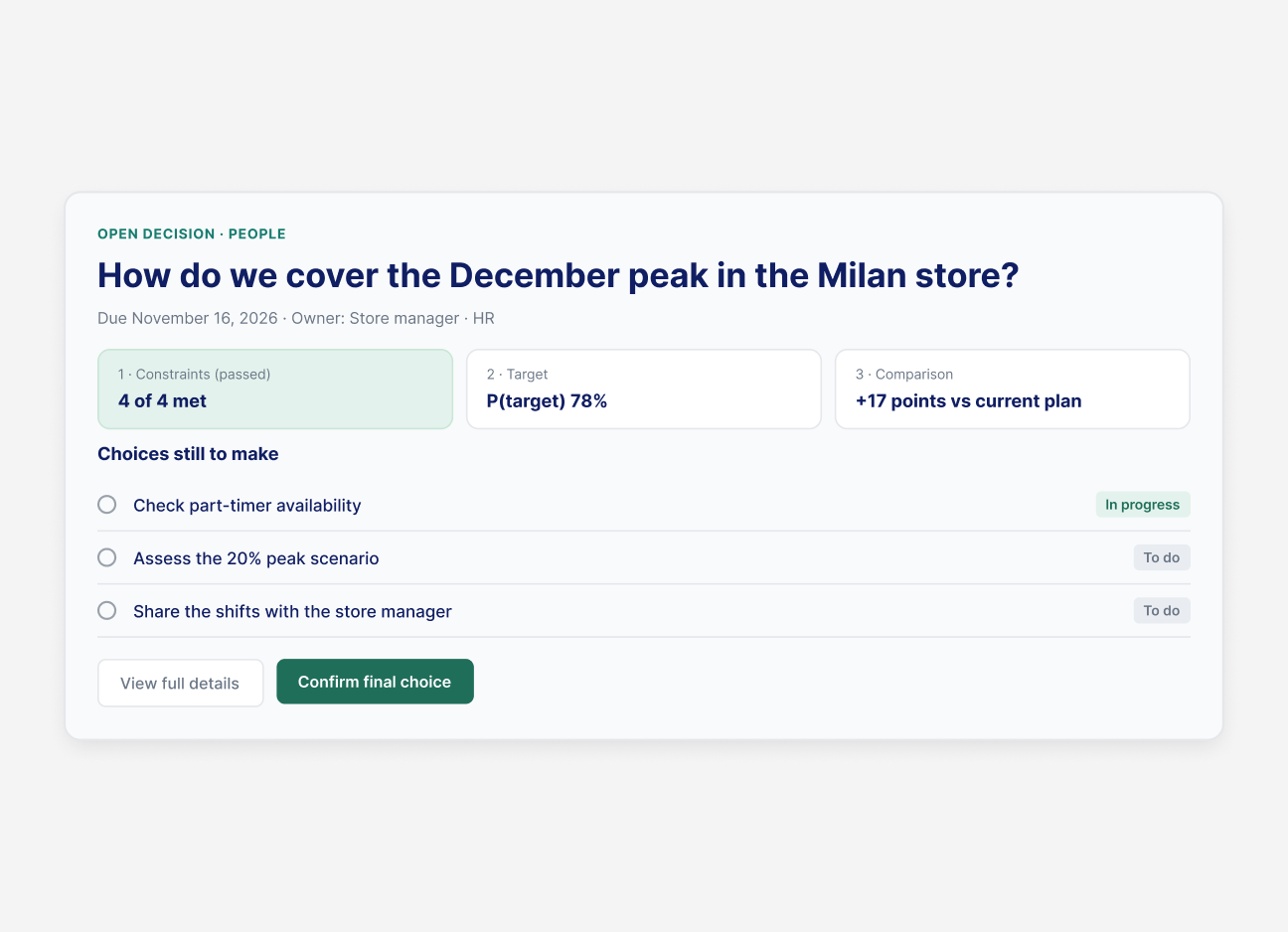
WhAI turns the way your company decides into a calculation model. It simulates every choice before you act, estimates the probability of hitting the goal and tracks the outcome.
DISCOVER WHAI
Open staffing decision in WhAI, with constraints checked and options compared
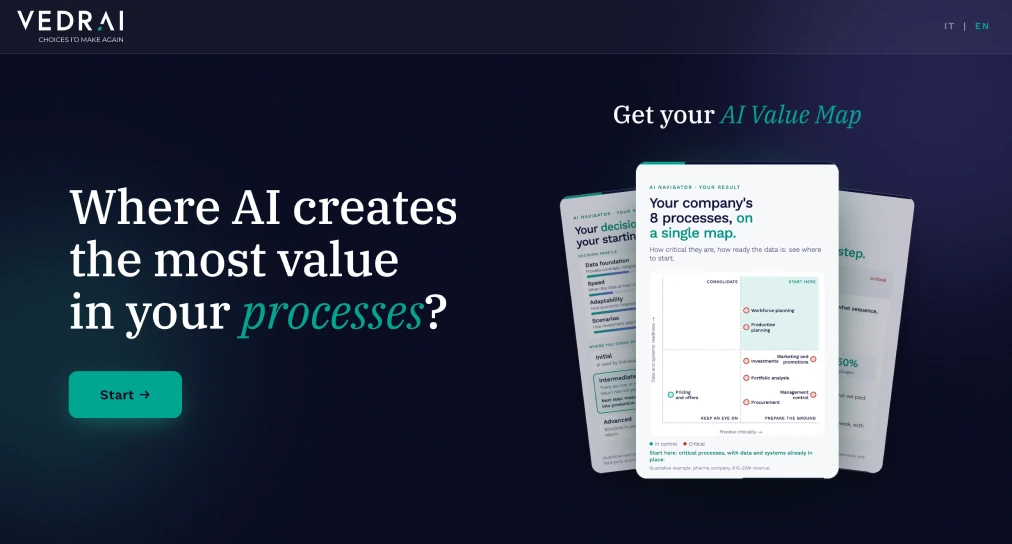
AI Navigator start page: where AI creates the most value in your processes, with a preview of the AI Value MapAI Navigator start page: where AI creates the most value in your processes, with a preview of the AI Value Map
AI NAVIGATOR

Which processes should you bring AI into?

AI Navigator is the assessment that identifies where AI creates the most value and which use case to start with: it cross-references data, process maturity, impact on margins and people, and returns your AI Value Map.

The highest-value use case
The KPIs to track
The estimated annual return

Request a demo

We’ll show you WhAI in action on a real process within your company